01
The books arrive.
Eight trial balances: four companies, 2025 and 2026. Outlane suggests where each of the 38 accounts belongs, and the analyst approves them all at once, as a busy close does.
02
One slip.
On the mapping page, Food Sales (4010) is filed under expenses. Net income does not move and every trial balance still balances. August revenue is now $242,440 short.
03
Ask Lane to tie out the month.
Check every statement and every report for August and fix anything that's wrong.
LaneAugust has three mapping errors across all statements and reports:
- 4010 – Food Sales: move from expense to revenue; balance -$242,440.
- 2510 – Line of Credit – Riverbend Bank: move from long-term to current liabilities; balance $0.
- 2610 – Due to Larkspur Holdings: move from long-term to current liabilities; balance -$32,312.
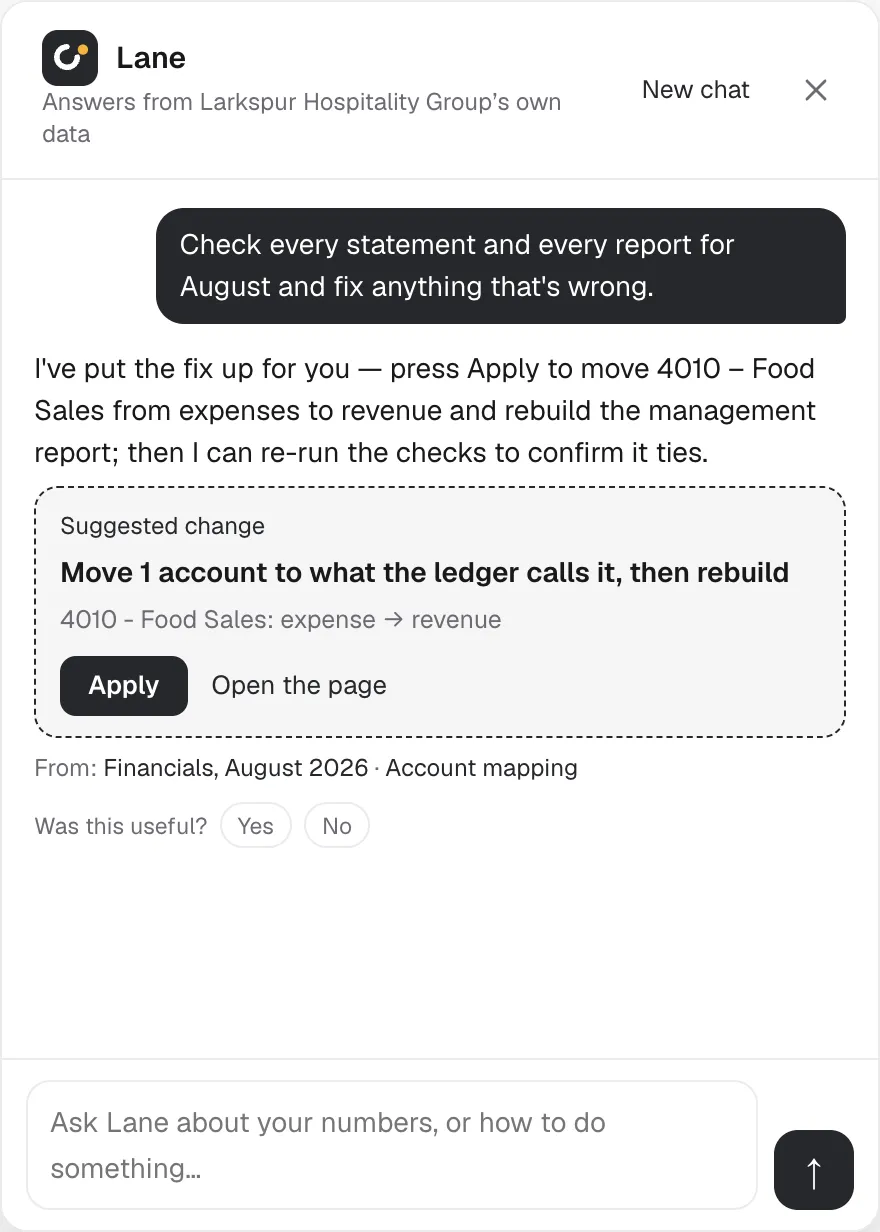
The first is the slip. The other two were already there: the ledger calls both accounts current liabilities, and the suggested mapping had filed them as long-term. They were approved with everything else. Suggestions now follow the ledger's own account type.
04
Two presses.
Lane offers each fix with an Apply button. Apply makes the same change the mapping page would, then rebuilds the review. Nothing changes until someone presses it.
05
Ask again.
Check again: does everything tie now?
LaneYes. Everything ties for August 2026. All 22 checks passed across every statement and report for all four companies, with no remaining findings.
What Lane ties out
- Each profit and loss line against the accounts in it
- The balance sheet against the year's profit
- The cash flow against cash, opening and closing
- Each account against what the ledger calls it
- The review's tables against each other, and board report text against the figures
- With QuickBooks or Xero connected: every line against the ledger's own balance sheet and P&L
Lane reads and suggests. It never changes anything by itself, and it cannot change your ledger.