01
The month arrives as files.
Corvane runs on NetSuite: a parent company and four subsidiaries under it. The analyst uploads what NetSuite exports anyway. That's a trial balance per company per year, the ledger detail with vendors, customers, classes and departments, and one budget workbook with a sheet for each company.
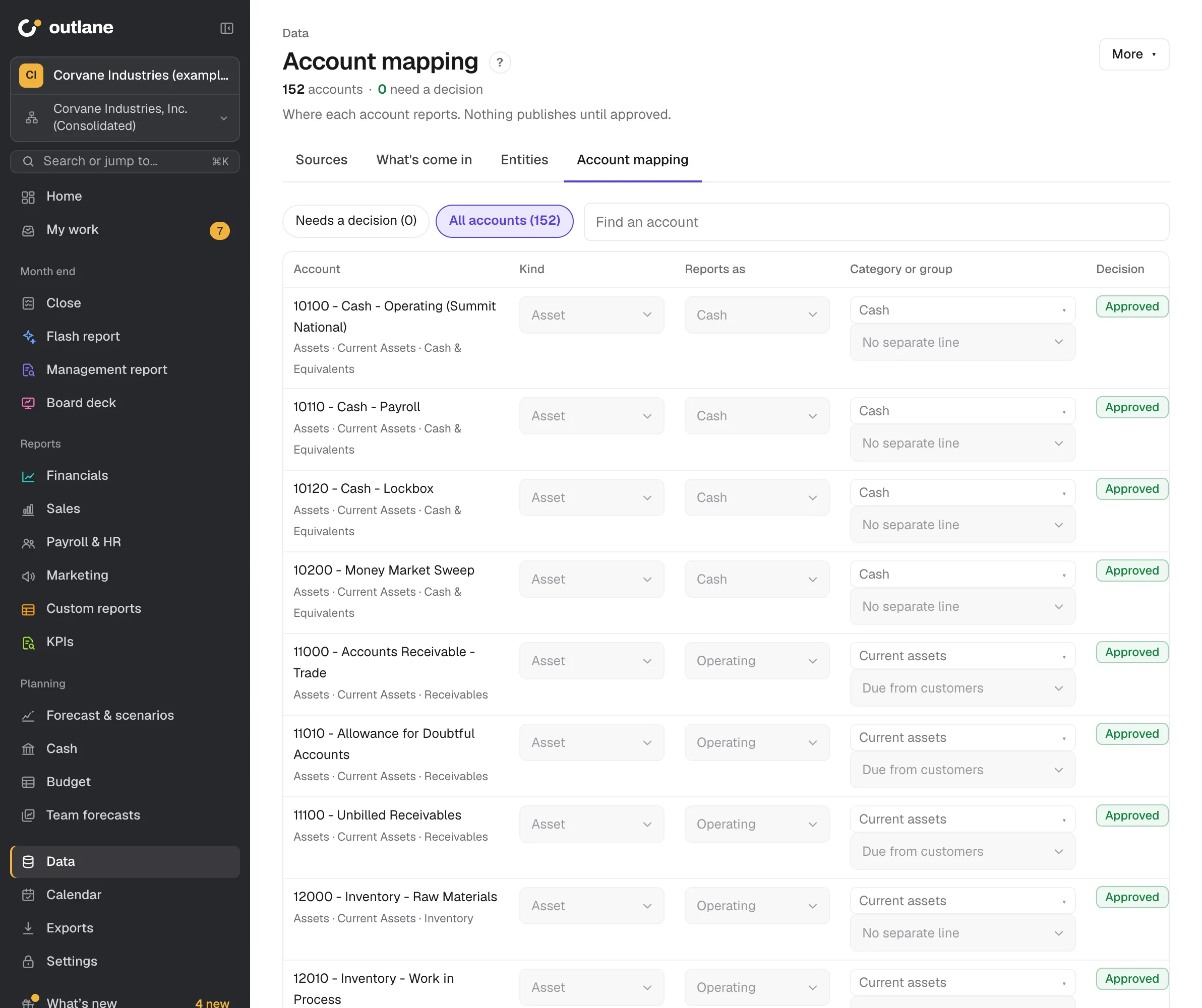
Outlane reads the parent and subsidiary structure from the exports. It suggests where each of the 152 accounts belongs in the reports. Nothing is published until someone approves the mapping.
02
One group, intercompany taken out.
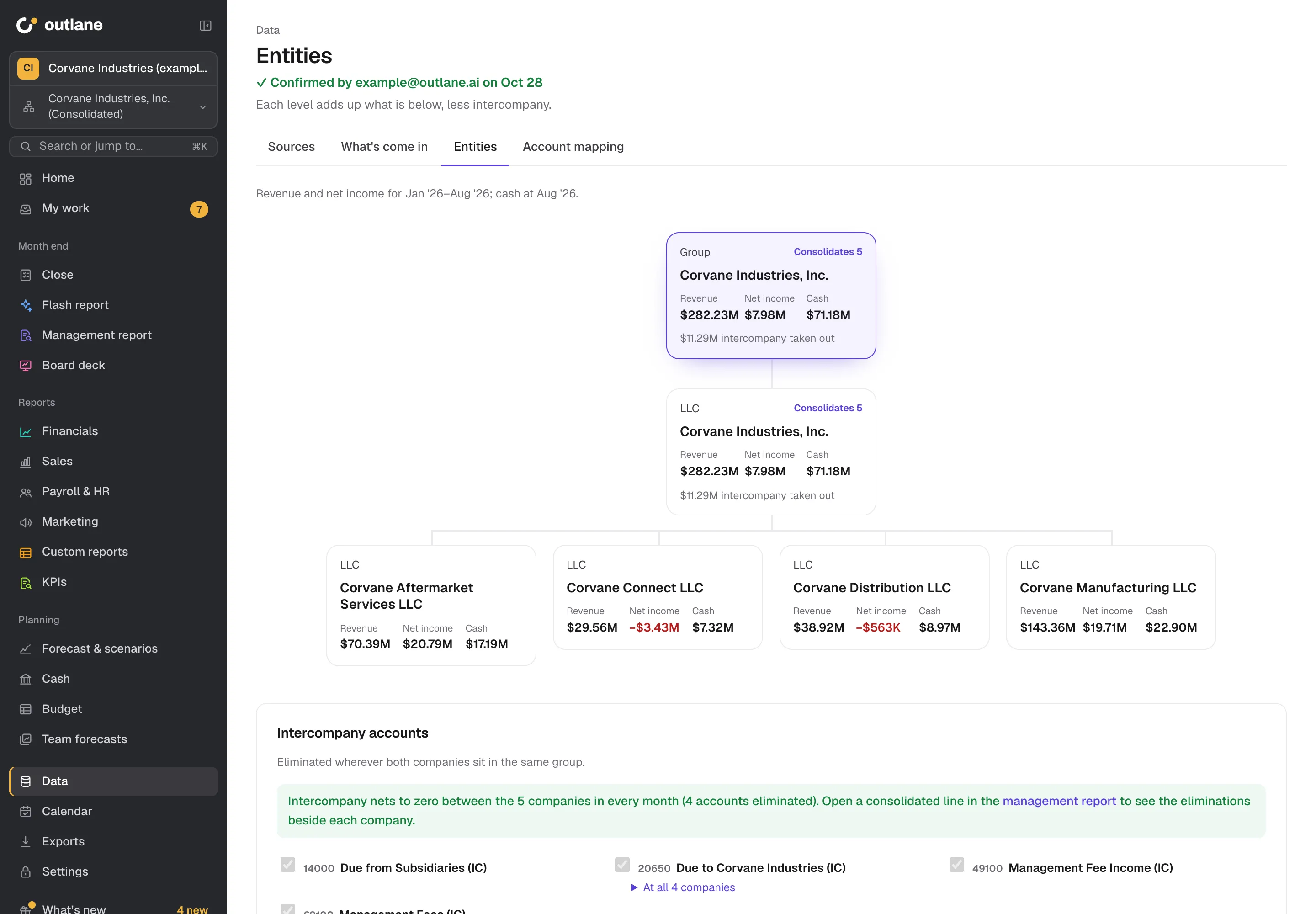
The parent charges its subsidiaries a management fee: $11.29M between January and August. Added up naively, that fee counts twice, as income at the parent and as cost at each subsidiary.
The analyst ticks the four intercompany accounts once. Outlane then takes them out wherever both sides sit inside the group, and checks that they net to zero every month.
03
Validated before anyone reads it.
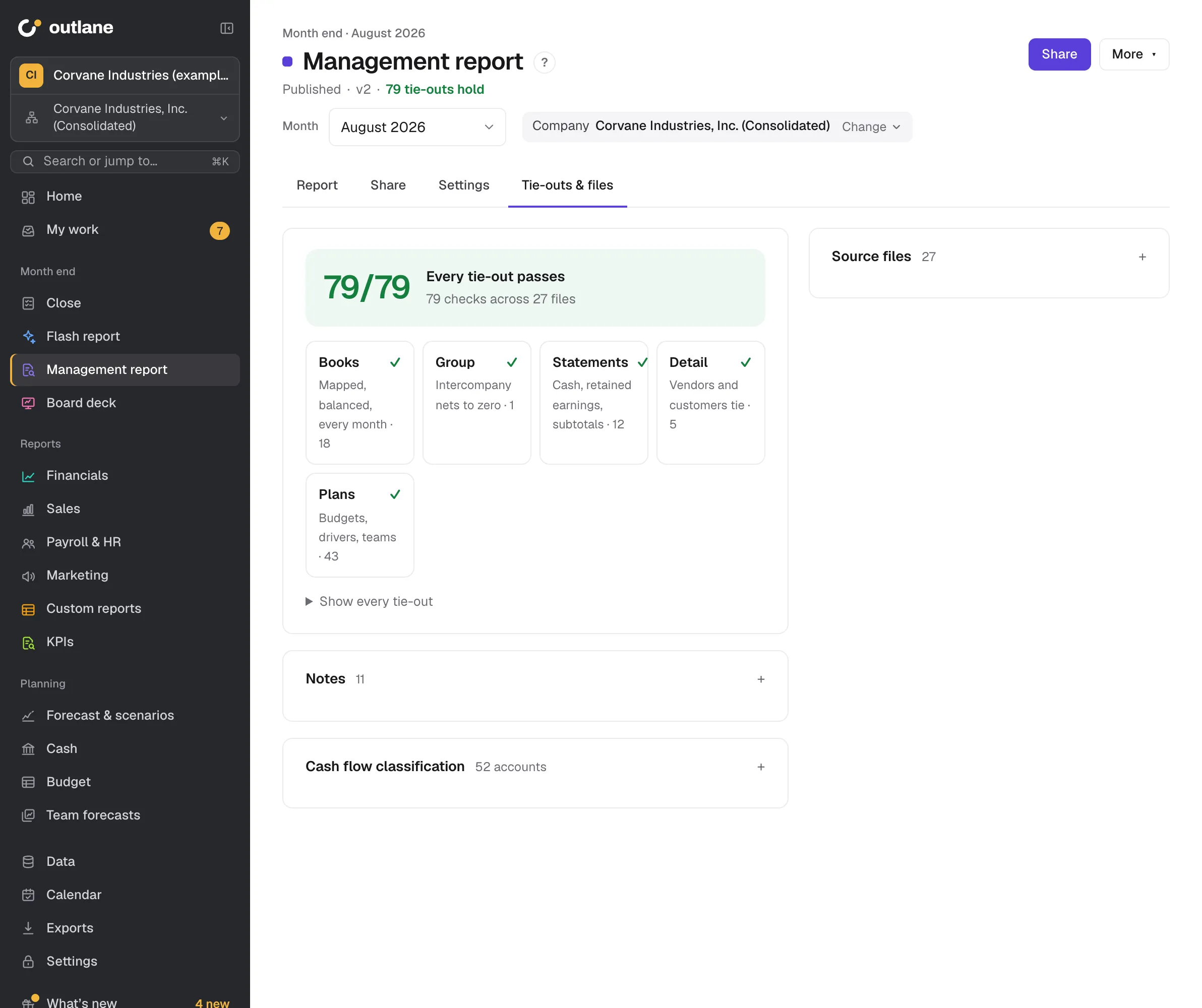
Before the review can be published, Outlane runs 79 tie-outs across the five companies. They include:
- every trial balance balances in every month
- no month is missing
- the cash flow reaches closing cash
- retained earnings roll forward by last year's result
- the vendor detail adds up to the trial balance
- intercompany nets to zero
A failing tie-out keeps the review a draft, with no override. Here, all 79 hold.
04
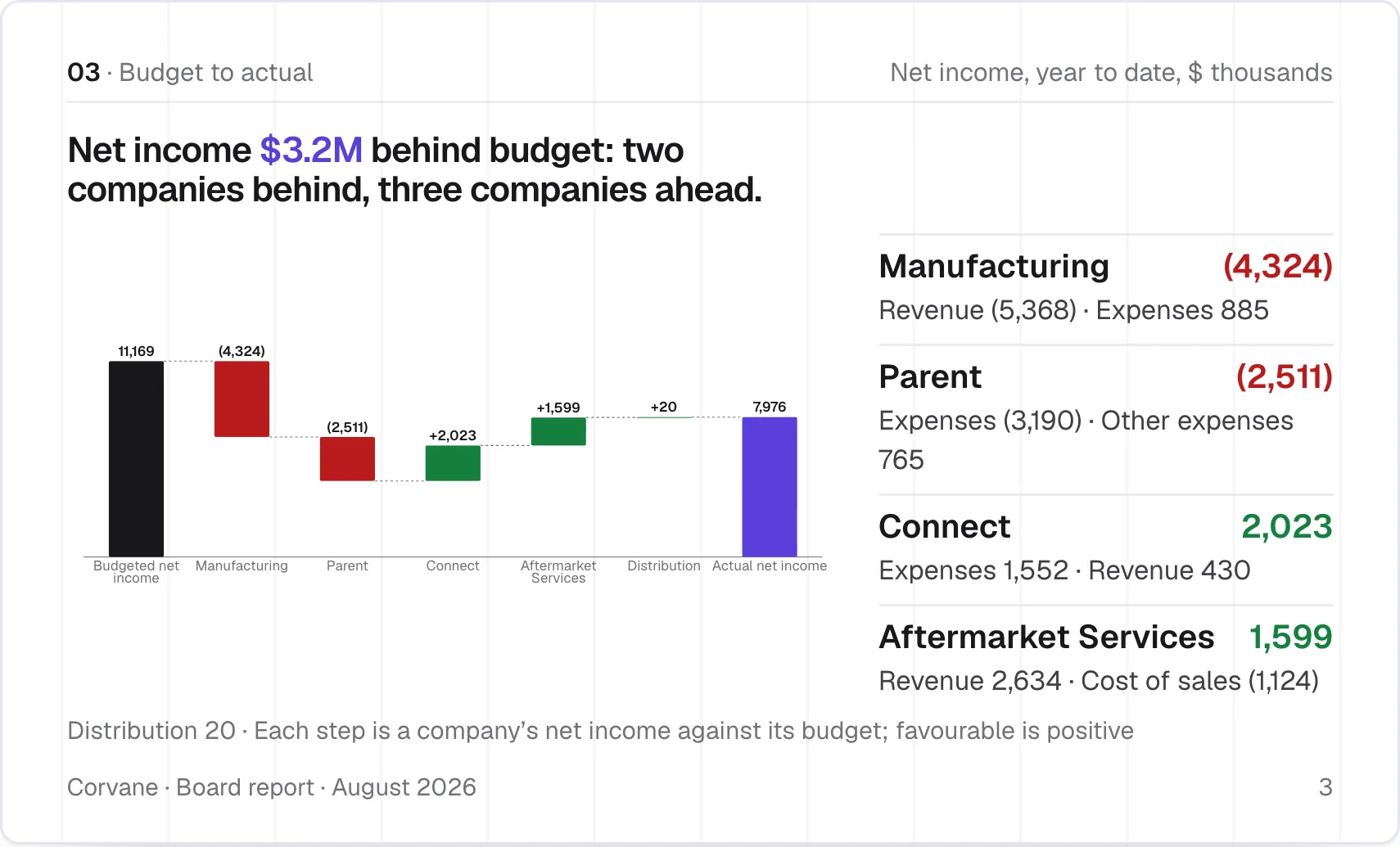
Where the $3.19M went.
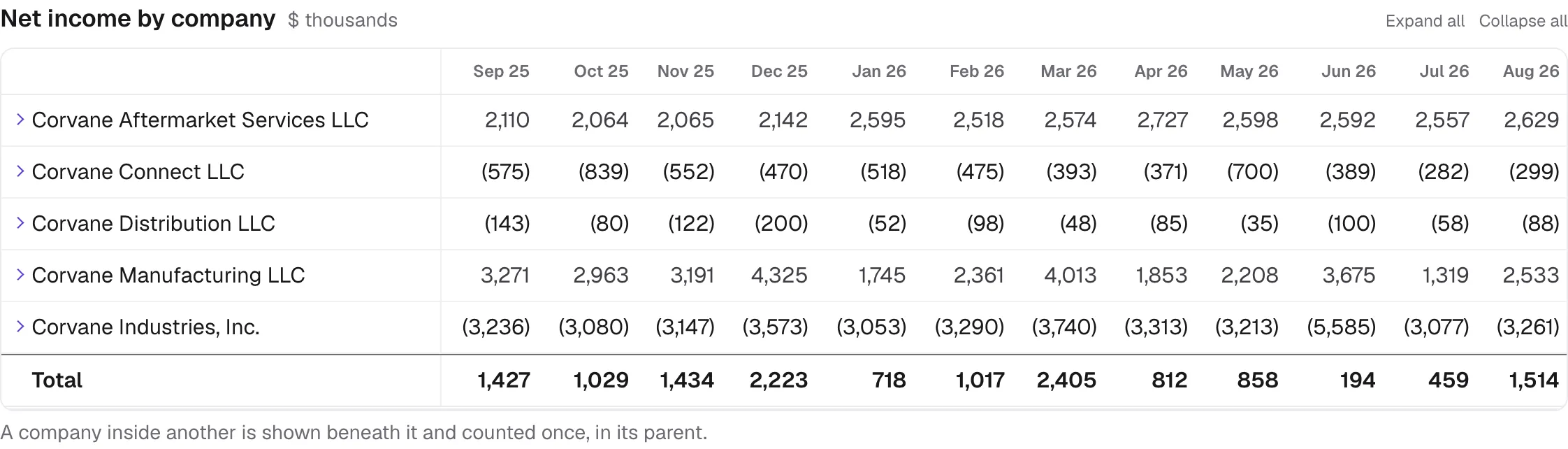
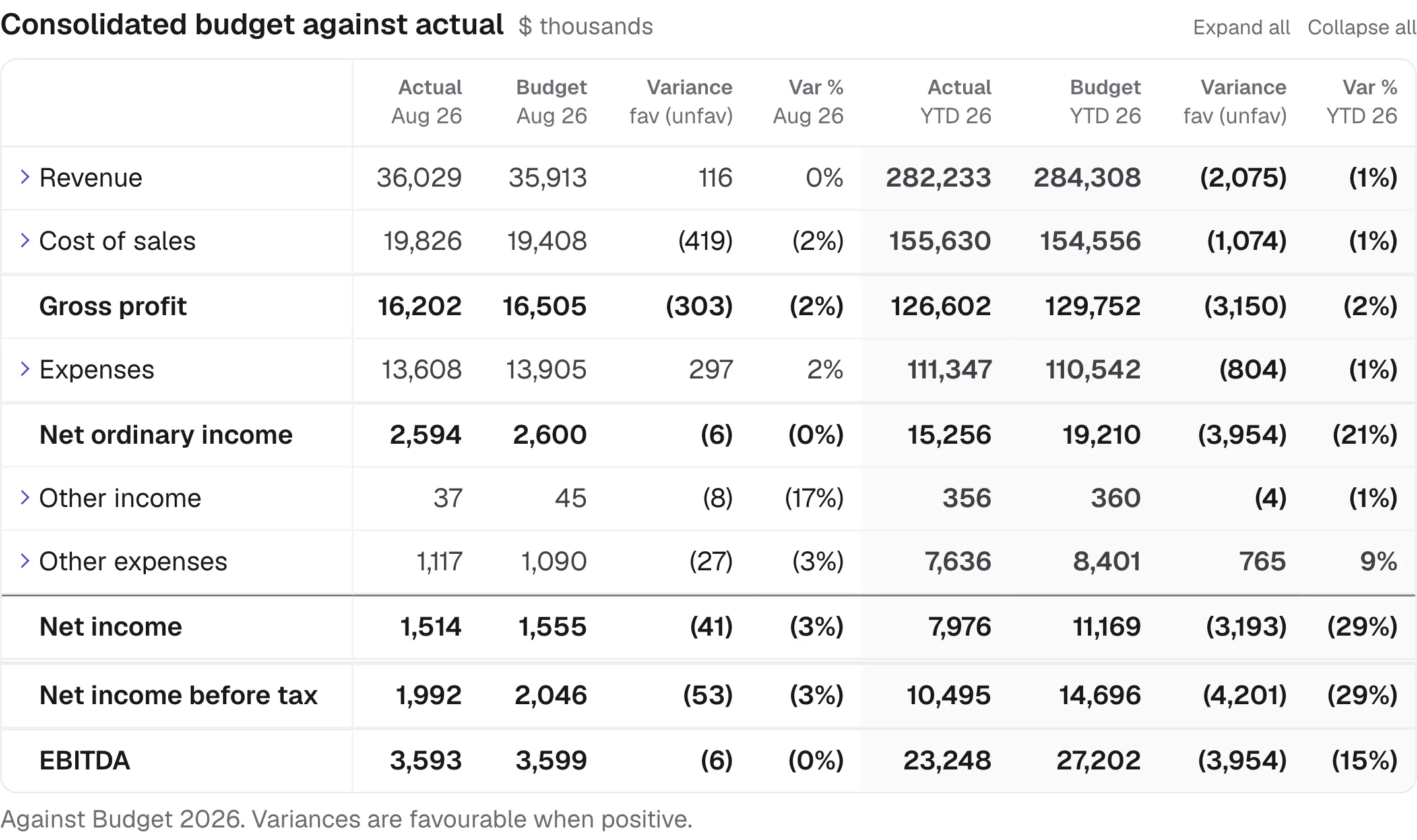
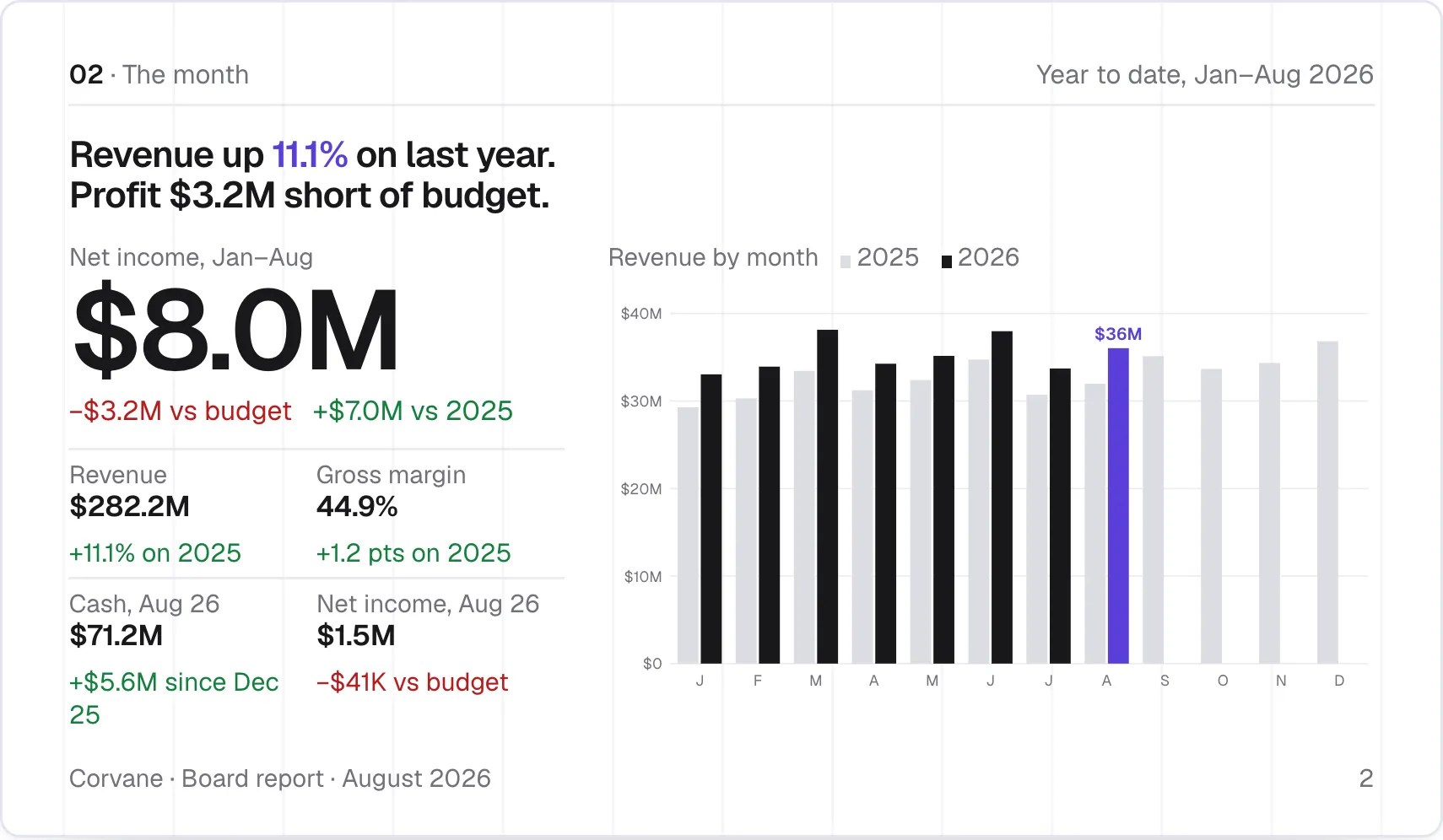
Year to date, the group made $7.98M against a budget of $11.17M. The review's bridge walks from one to the other, one company at a time. Opening a company shows the lines and accounts behind its step.
- Budgeted net income$11.17M
- Corvane Manufacturing LLCA large pump order slipped: pump sales $4.79M under budget. A steel tariff added $0.40M to cost of sales.−$4.32M
- Corvane Industries, Inc. (parent)A $2.40M legal settlement in June that no budget carried, plus higher litigation and consulting fees.−$2.51M
- Corvane Connect LLCSubscriptions grew faster than budgeted, and hiring ran behind plan.+$2.02M
- Corvane Aftermarket Services LLCParts sales $2.60M ahead of budget.+$1.60M
- Corvane Distribution LLCOn budget.+$0.02M
- Actual net income$7.98M
05
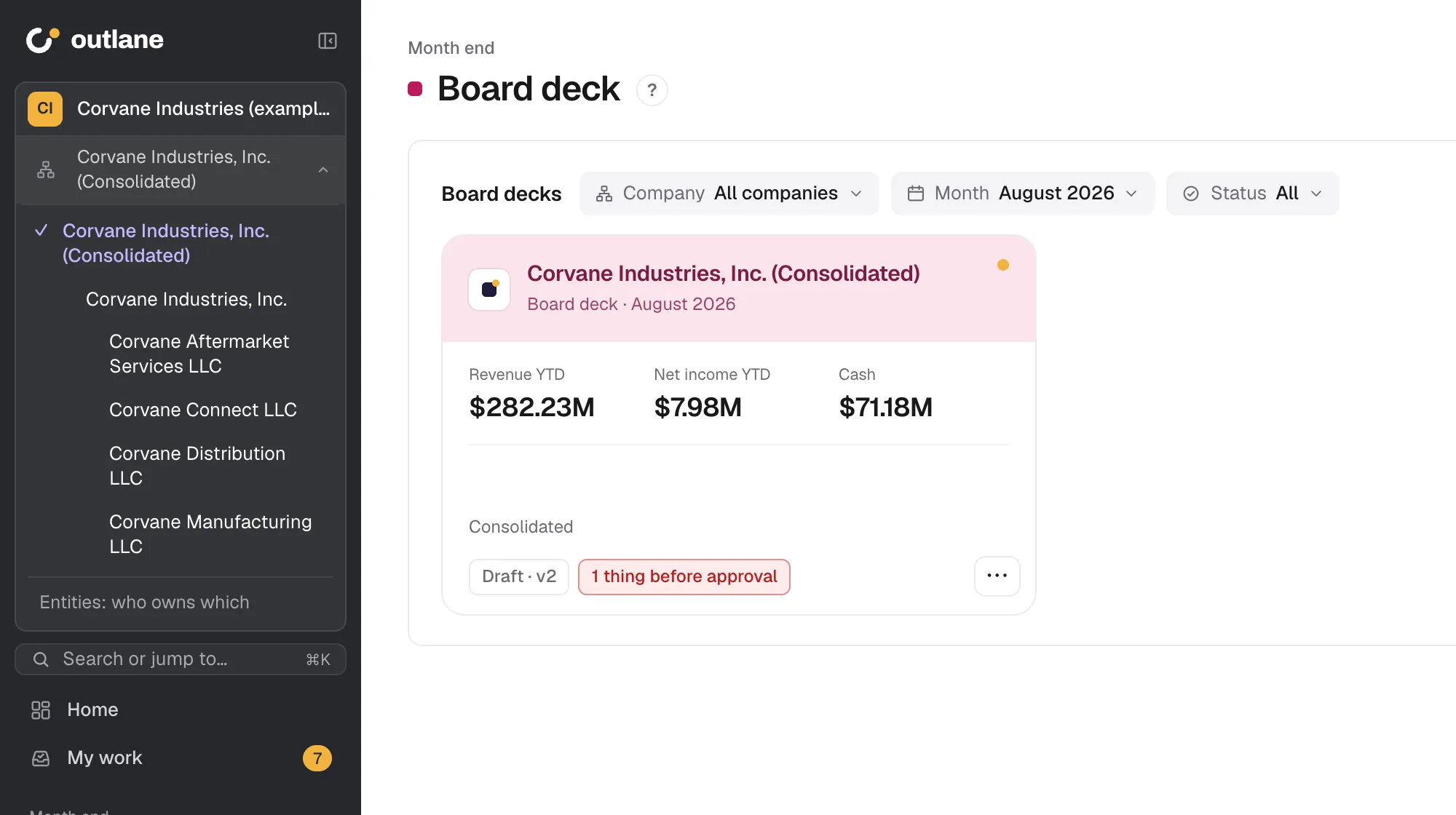
The board deck, in the analyst's words.
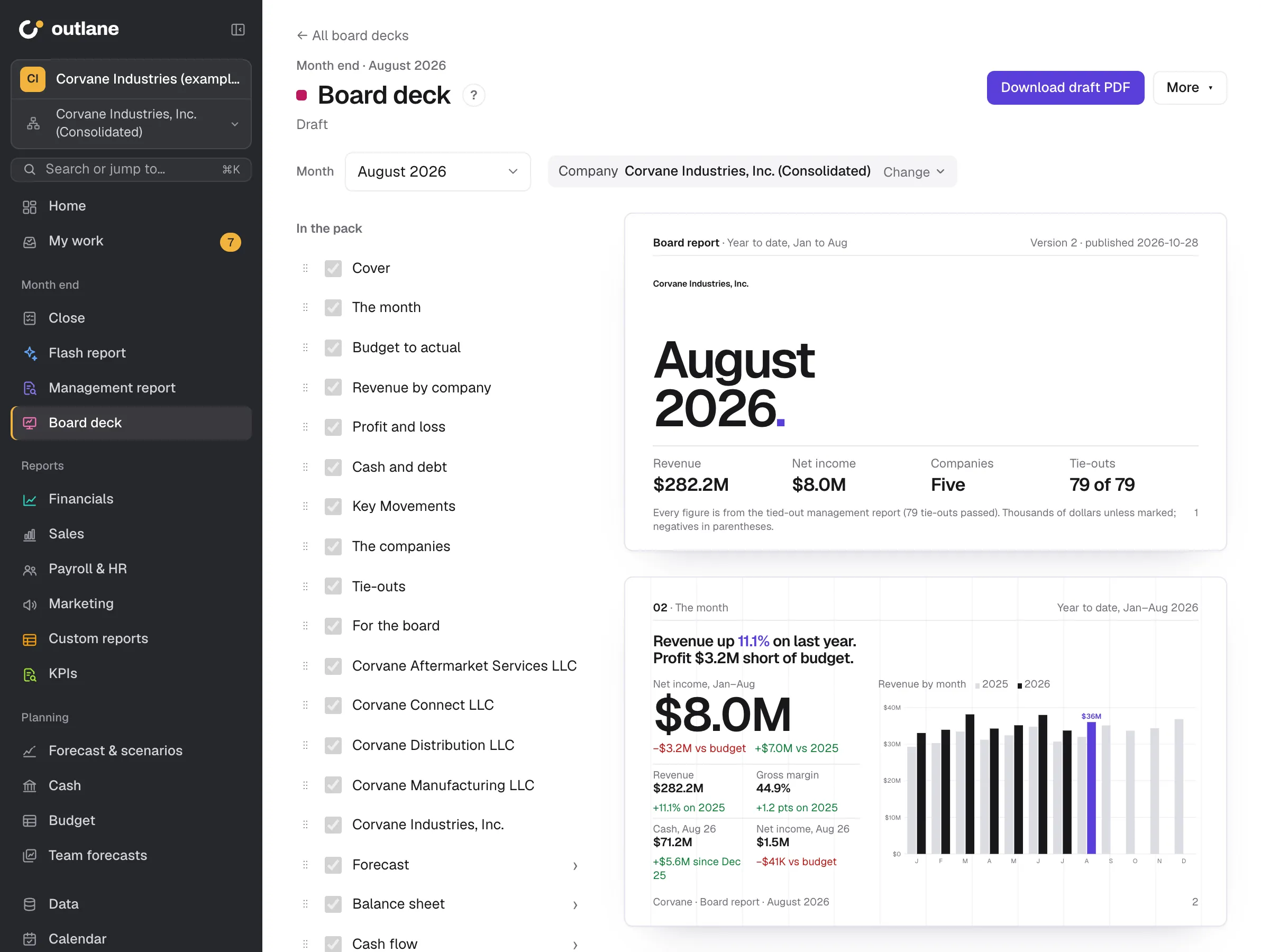
The standard deck builds itself from the tied-out review:
- cover and summary
- key figures
- the P&L against budget
- the bridge
- the forecast
- the balance sheet and cash flow
- a page per company
The analyst clicks the words to edit them, charts the bridge as a waterfall, and adds one line of commentary. If a figure changes later, typed text that quotes the old number is flagged. It downloads as one PDF.
06
The group, or any one company.
When the CEO of Corvane Connect asks for their own numbers, the analyst picks Connect from the entity list. The list follows the org chart. Financials and the team reports switch with it.
What the month took
- Three uploads: trial balances, ledger detail, budget
- One mapping approval, and four intercompany accounts ticked once
- No consolidation spreadsheet, and no elimination entries typed by hand
- No figures retyped into slides: the deck is drawn from the review
Shown with AI suggestions switched off. Outlane works without them.